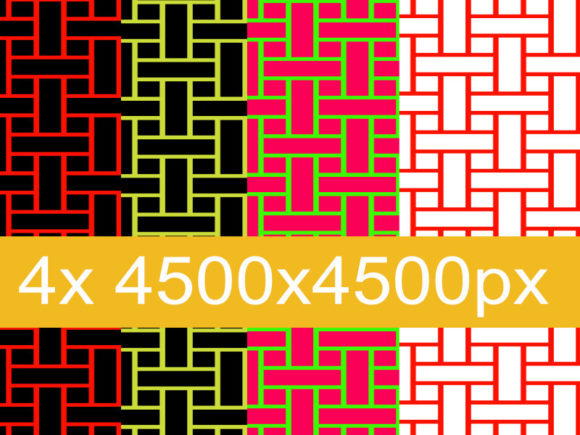
Evaluating Backgrounds Patterns Texture 4 Colors for Design Projects
When assembling a visual toolkit for digital or print design, the search for reliable, high-resolution assets often leads to specific product bundles. One such offering is Backgrounds Patterns Texture 4 Colors, a collection typically presented as a set of four coordinated color variations, each delivered at a substantial 4500x4500 pixel resolution with 300 DPI. For designers, content creators, and marketers evaluating their next asset purchase, understanding what this type of product provides—and where it may fall short—is essential for making an informed decision.
This article offers a balanced evaluation of Backgrounds Patterns Texture 4 Colors, exploring its practical applications, benefits, limitations, and the contexts in which it either excels or warrants consideration of alternatives. The goal is to help you determine whether this asset aligns with your specific project needs and workflow expectations.
What Backgrounds Patterns Texture 4 Colors Actually Provides
At its core, Backgrounds Patterns Texture 4 Colors is a curated set of background assets. The name itself describes the three key attributes: the asset type (backgrounds and patterns with visible texture), the color range (four distinct but coordinated colorways), and the technical specifications (4500x4500px at 300 DPI). This resolution and DPI combination means the files are suitable for both screen-based work and high-quality print applications, from web banners to posters and packaging mockups.
The texture component is particularly important. Unlike flat vector patterns or simple gradients, textured backgrounds introduce visual depth, grain, or surface feel. This can lend a tactile quality to otherwise digital compositions, making them appealing for branding, social media graphics, product photography backdrops, and editorial design. The four-color structure gives you a cohesive mini-palette, allowing for variation without requiring you to source separate assets for each color shift.
It is worth noting that the term "product" here often refers to a digital download bundle. You are not purchasing a physical item, but rather licensing digital files for use across your projects. Understanding the license terms—whether for commercial use, personal use, or restricted applications—is a critical first step before integrating any such asset into your work.
Reasons to Consider Backgrounds Patterns Texture 4 Colors
Several practical motivations might lead you to evaluate this type of asset bundle. Understanding these can help clarify whether your own needs align with what the product offers.
Time Efficiency and Convenience
Producing high-resolution textured backgrounds from scratch requires significant time, software proficiency, and often expensive tools. A pre-made set like Backgrounds Patterns Texture 4 Colors eliminates the production phase, allowing you to drop finished assets directly into your compositions. For tight deadlines or high-volume projects, this convenience is a genuine advantage.
Consistent Visual Language
Because the four color variations typically share the same pattern and texture structure, they offer built-in coherence. When designing a campaign, presentation, or website that requires multiple background options, having four coordinated files reduces the risk of mismatched styles. This consistency can strengthen brand identity or thematic unity without requiring manual color matching.
Print-Ready Resolution
The 4500x4500px dimension at 300 DPI translates to roughly a 15x15 inch print area at full quality. This makes the asset suitable for large-format print projects, trade show materials, or high-resolution digital displays. For designers working across both screen and print, this versatility reduces the need to resize or upscale assets, preserving detail and sharpness.
Texture Adds Depth
Flat backgrounds can feel sterile or unfinished. The texture element in this product adds a layer of visual interest that can enhance perceived quality. Whether it mimics paper grain, fabric weave, or subtle distress, texture helps backgrounds feel more organic and engaging. This can be particularly valuable for product photography overlays, book covers, or brand presentations where a polished yet tactile look is desired.
Tradeoffs and Limitations to Expect
No digital asset is universally perfect. A balanced evaluation of Backgrounds Patterns Texture 4 Colors requires acknowledging where it may not meet expectations or where it demands compromise.
Limited Customization
You are confined to the four provided colors and the existing pattern design. If your project requires a specific brand color that falls outside the palette, or if you need a different pattern orientation or texture intensity, you will likely need to edit the files in photo editing software. While the high resolution allows for some cropping and color adjustment, significant alterations may degrade quality or require advanced skills. This is a meaningful tradeoff for designers who prioritize full creative control.
Potential for Overuse
Because digital asset bundles are sold to many users, there is always a risk that the same background patterns appear in multiple projects across the web or in print. If uniqueness is a high priority—for a flagship brand identity, for example—a widely available asset may feel less distinctive. This is not necessarily a problem for internal materials or short-term campaigns, but it is worth considering if exclusivity matters to you.
Fixed Aspect Ratio and Size
The square 4500x4500px format is generous but not infinitely flexible. For non-square layouts, you will need to crop, tile, or stretch the asset. Stretching may distort the pattern or texture, while cropping reduces the effective usable area. Tiling can work well for seamless patterns, but if the texture includes irregular elements, seams may become visible. Understanding the asset's geometry before purchase helps avoid unexpected layout constraints.
Texture May Not Suit All Styles
Textured backgrounds, by their nature, add noise. In minimalist or ultra-clean designs, even subtle texture can feel distracting or muddy. Conversely, in very busy compositions, a heavily textured background may compete with foreground elements. The suitability of Backgrounds Patterns Texture 4 Colors depends heavily on the aesthetic direction of your project. It is a specialized tool, not a universal solution.
Scenarios Where This Asset Is a Strong Fit
Based on its characteristics, Backgrounds Patterns Texture 4 Colors tends to perform well in specific contexts. Recognizing these can help you decide if it aligns with your current project or workflow.
- Social Media and Web Graphics: The four-color set provides quick variety for posts, banners, and thumbnails, while texture adds a professional finish that stands out in feeds dominated by flat design.
- Product Photography Backdrops: For e-commerce or lifestyle shoots, textured backgrounds add depth without distracting from the product. The high resolution supports large prints for physical sets.
- Presentation Decks and Reports: A subtle textured background can elevate a slide deck or annual report, making it feel more considered and less template-like. Having four colors allows section differentiation.
- Packaging Mockups: The 300 DPI resolution is ideal for mockup presentations where realistic print simulation is required. The texture can mimic uncoated paper or specialty stock.
- Brand Explorations: When developing mood boards or style tiles, these backgrounds offer a ready-made foundation for exploring color and texture combinations without initial production effort.
When Alternatives Deserve Consideration
If you identify with any of the following situations, you may want to explore other options before committing to this product.
Need for Full Color Flexibility
If your project demands a precise or extensive color palette, a set limited to four colors will constrain you. In that case, consider purchasing individual textured backgrounds where you can select exact hues, or create your own using software like Photoshop or Affinity Photo. Pattern generators and texture creation tools offer unlimited color control at the cost of your time.
Requirement for Unique, Original Assets
For high-stakes branding or exclusive print publications, a mass-market digital bundle may not provide the originality you need. Commissioning custom patterns or purchasing from a boutique creator who offers limited-edition assets can ensure your project remains distinct. The tradeoff is higher cost and longer lead time.
Need for Editable Vector Files
If your workflow relies heavily on vector formats for infinite scalability or easy color editing, a raster texture asset may feel restrictive. Vector patterns and gradients offer more flexibility for resizing and recoloring without quality loss. Evaluate whether the resolution of 4500x4500px is genuinely sufficient for your largest output, or whether vector scalability would better serve your needs.
Minimalist or Clean Aesthetic
Projects that demand flat, clean, or highly modern aesthetics may find textured backgrounds counterproductive. In such cases, solid colors, simple gradients, or clean vector patterns are likely more appropriate. Texture adds visual information that, while often welcome, can conflict with a minimalist direction.
Practical Decision-Making Insights
To determine whether Backgrounds Patterns Texture 4 Colors is right for you, consider the following practical framework.
- Assess your color needs. List the exact colors required for your project. Compare them against the four provided. If they match closely or you can adapt your palette, the set may be a good fit. If not, the asset may require additional editing or fail to meet expectations.
- Evaluate the texture style. Request or review sample images if available. Ensure the texture intensity, pattern style, and overall aesthetic align with your design direction. Texture is a subjective element; trust your visual judgment.
- Consider your output format. For print applications, confirm that 300 DPI is sufficient for your intended print size. For digital use, consider whether the file size at 4500x4500px is manageable within your workflow and storage constraints.
- Weigh uniqueness vs. efficiency. If speed and convenience outweigh the need for exclusivity, a pre-made bundle is logical. If your project demands originality, invest in custom or limited-edition assets instead.
- Review the license. Ensure the license permits your intended use—commercial, personal, or both. Some bundles restrict use in logo designs, merchandise, or resale. Clarify this before purchase to avoid legal or ethical complications.
Final Evaluation: Aligning with Your Goals
Backgrounds Patterns Texture 4 Colors is a practical, time-saving asset for designers who need high-resolution textured backgrounds in a limited, coordinated color range. Its strongest appeal lies in convenience, print-readiness, and visual consistency across four variations. For social media content, product photography backdrops, presentation materials, and branding explorations, it can serve as a reliable foundation.
However, it is not a tool for every occasion. Its fixed color palette, raster format, and potential for widespread use mean it may not suit projects requiring custom color accuracy, exclusive originality, or vector flexibility. Recognizing these tradeoffs allows you to evaluate the asset on its own terms rather than expecting it to fulfill needs it was not designed to meet.
Ultimately, the decision rests on how well the product's strengths align with your specific project requirements. By assessing your color palette, aesthetic direction, output format, and need for uniqueness, you can determine whether Backgrounds Patterns Texture 4 Colors is a valuable addition to your design resources or a pass for something more tailored to your workflow.