Mandala Green Patterns – A Versatile Design Resource for Creative Projects
Design professionals, illustrators, and hobbyists often seek resources that combine aesthetic appeal with practical flexibility. Mandala Green Patterns is a vector design graphic set centered on green-toned mandala motifs, packaged in formats that support a wide range of creative workflows. This article examines what this resource offers, explores scenarios where it adds value, and outlines considerations to help you decide if it aligns with your project needs.
What Are Mandala Green Patterns?
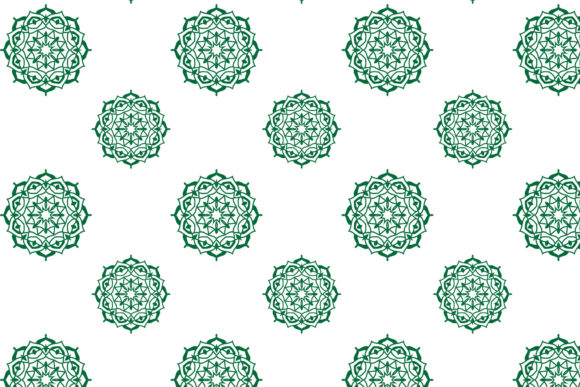
Mandala Green Patterns is a collection of vector-based mandala designs, predominantly featuring shades of green. The set is delivered in multiple file formats: one Adobe Illustrator (AI) version 10 file, one Encapsulated PostScript (EPS) 10 file, one Portable Network Graphics (PNG) file, one Joint Photographic Experts Group (JPG) file, and one Scalable Vector Graphics (SVG) file. Because the core files are vector-based (AI, EPS, SVG), they remain infinitely scalable without quality loss. The PNG and JPG raster files provide immediate use in contexts where vector editing is not available. The pack is described as easy to use, openable, editable, and resizable, making it accessible to users with varying levels of technical expertise.
Why Consider Mandala Green Patterns for Your Designs?
A designer’s decision to invest in a resource like this often hinges on a few key factors: time savings, creative flexibility, and file compatibility. Below are the primary reasons you might evaluate this collection.
Scalable Vector Files Retain Quality
The inclusion of AI, EPS, and SVG files means you can resize the mandala elements from a small logo detail to a large poster without pixelation. This is especially important for projects that require output at multiple scales, such as brand identity systems, where a mark must work on a business card and a billboard. Vector formats also allow you to edit individual anchor points, change stroke weights, or recolor elements precisely, giving you control beyond what raster images permit.
Immediate Raster Formats for Quick Use
The PNG and JPG files allow you to drop the patterns directly into software that does not support vectors—for example, some photo editors, presentation tools, or web platforms. Having both a lossless Portable Network Graphics file and a compressed Joint Photographic Experts Group file means you can choose between transparency support and smaller file size depending on the use case.
Green Color Palette Offers Thematic Consistency
The green hues in the patterns can be a natural fit for projects related to nature, sustainability, health, wellness, finance, or growth. If your design work frequently involves these themes, the pre‑colored mandalas reduce the time spent adjusting color schemes. At the same time, because the vector files are editable, you are not locked into the default green if you need to adapt the designs to a different brand palette later.
Ease of Use Versus Learning Curve
Benefit: The product description states that the files are easy to use, and for anyone familiar with Adobe Illustrator, CorelDRAW, or other vector editors, opening and modifying the designs should be straightforward. The inclusion of an AI 10 file ensures backward compatibility with older software versions, and EPS 10 is a widely supported exchange format.
Tradeoff: If you have never used vector editing software, you may need to invest some time learning how to ungroup, recolor, or reshape the elements. The PNG and JPG files are ready to use immediately, but full editing potential requires vector-capable software. Users without such tools will benefit from the raster files but will miss out on the scalable editing advantages.
Versatility Across Media
The patterns can be applied to logos, illustrations, animations, t‑shirt designs, and more. The vector structure allows you to extract individual motifs, combine them with other graphics, or animate them for motion projects. For screen printing, the clean vector outlines help create crisp separation layers.
Consideration: Because the set focuses exclusively on green patterns, it may not suit projects that require a broader spectrum of colors or a different aesthetic. If your design brief demands warm tones, monochrome, or multicolor compositions, you might need to either recolor the vectors (which is possible but time‑consuming) or look for a more varied pattern set.
File Format Compatibility
The bundle includes five common formats, increasing the likelihood that you can open at least one without converting. SVG files are widely supported on the web and in many design applications. EPS files remain a staple in professional print workflows. The AI file provides native editing for Illustrator users.
Potential downside: Some of these formats, particularly AI and EPS, can be larger in file size and may not be directly usable in lightweight or mobile design apps. If your primary workflow is entirely web‑based or mobile‑oriented, you may rely on the SVG or raster versions, which still provide ample functionality.
When Are Mandala Green Patterns a Strong Fit?
- Branding and logo design: If you need a symmetrical, nature‑inspired element for a company identity, the mandala patterns can serve as a central logo mark or as background art. The scalability of vectors ensures consistent quality across print and digital.
- Eco‑conscious and wellness projects: The green palette aligns with environmental, organic, yoga, meditation, and holistic health brands. Using pre‑made patterns can speed up concept development for brochures, websites, or packaging.
- Apparel and merchandise: T‑shirt designs benefit from clean vectors that can be scaled to fit different garment sizes. The patterns can be placed as all‑over prints or as focal graphics.
- Animation and motion graphics: Vector mandalas can be animated in programs like After Effects. Their symmetrical structure lends itself to rotational or morphing effects, and the editable paths allow you to adjust complexity for performance.
- Digital illustrations and social media content: The PNG files with transparency let you layer patterns over photos or other backgrounds, while SVG files can be inserted directly into web projects without extra export steps.
When Might Alternatives Be Worth Considering?
- When you need non‑green color variations: While you can recolor the vectors, doing so extensively may be less efficient than purchasing a multicolor mandala set. If green is not part of your project’s palette, consider other pattern packs that match your exact color scheme.
- When you require ultra‑detailed, intricate mandalas: The complexity of the patterns is not specified in the product description. If you need extremely fine details (e.g., for laser engraving or high‑resolution print), verify that the vectors contain enough points to maintain crispness at very large scales. Some simple mandala sets may lack the detail needed for specialized uses.
- When you only need a single file format: If you exclusively work with PNGs and never edit vectors, you could opt for a cheaper or free raster mandala collection. The value of this bundle lies partly in the multi‑format vector inclusion, so if you won’t use that, you may pay for features you do not need.
- When you prefer a different design style: Mandalas come in many styles—geometric, floral, ethnic, modern. This product focuses on green patterns, but the visual style (e.g., line weight, shape density, symmetry type) may not suit every aesthetic preference. Review sample images (if available) before purchasing.
Practical Decision‑Making Insights
To determine whether Mandala Green Patterns align with your goals, consider the following:
- Assess your software ecosystem: If you already use Adobe Illustrator, Affinity Designer, or any app that opens SVG/EPS, the vector files become a flexible asset. If you rely solely on raster editors, the PNG and JPG files will still serve many purposes, but you lose the ability to scale without degradation.
- Evaluate your color requirements: Green is a specific choice. If your current or upcoming projects center on nature, finance, or wellness, this set could be a time‑saver. If you work with diverse brands, you might need to plan for recolor work or purchase multiple pattern sets.
- Consider project scale: For one‑off designs, the included files may be sufficient. For mass‑produced merchandise or large‑format prints, the vector formats justify the investment because they prevent resolution problems.
- Look at the patterns’ structure: Because the product description emphasizes that the files are editable, resizable, and easy to use, you can expect that the vector layers are organized reasonably well. However, if you are a beginner, be prepared to learn basic vector editing techniques to ungroup and modify the designs.
- Weigh the cost versus usage frequency: If you often work with mandala motifs or green themes, this resource can pay for itself through repeated use across multiple projects. If you need it for a single task, check whether free alternatives (such as open‑source vector mandalas) meet your quality standards.
Final Thoughts on Selection
The strength of Mandala Green Patterns lies in its combination of vector scalability, multiple file formats, and thematic consistency. For designers who require editable, resizable green mandala elements for logos, illustrations, apparel, or animation, this set offers a practical starting point. The inclusion of AI, EPS, PNG, JPG, and SVG files ensures that you can incorporate the designs into nearly any workflow, from professional vector editing to quick raster placement.
Like any specialized design resource, it works best when its characteristics match your project’s demands. If your work regularly touches on green palettes and symmetrical patterns, this bundle reduces preparation time. If your needs are broader, consider how easily you can adapt or supplement the set. Understanding your own software proficiency, desired output, and aesthetic direction will guide you to the right choice. Ultimately, Mandala Green Patterns is a focused tool—evaluate it based on how well it fits the specific design problems you solve.