Valentine Patterns: Strategic Design Assets for Purpose-Driven Work
Design assets are often treated as afterthoughts—pretty additions chosen at the last minute to fill space. But in practice, the visual elements you select can shape how an audience perceives your message, your brand, and your intent. Valentine Patterns offers a collection of design files that, when used thoughtfully, become more than decoration. They become tools for communication, positioning, and strategic alignment. Whether you are preparing a campaign, building a brand identity, or creating content for a seasonal promotion, understanding how to approach these patterns with intention is what separates effective work from random output.
This article is written for professionals who need to make decisions about design resources—entrepreneurs, marketers, educators, freelancers, and small business owners. The goal here is not to sell you on Valentine Patterns but to help you think clearly about when and how to use them for results that matter.
Understanding Valentine Patterns and Their Strategic Role
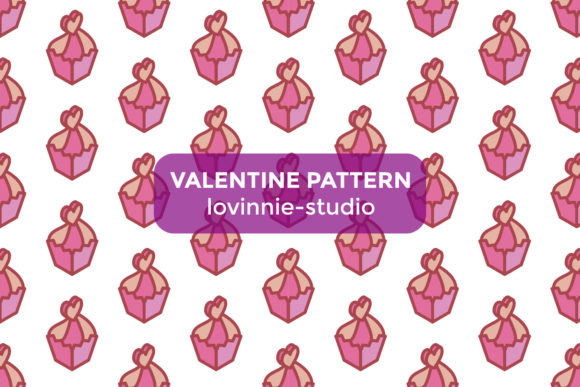
Valentine Patterns is a curated set of design files available in six formats: AI, EPS, SVG, DXF, JPG, and PNG. Each file is delivered at a canvas size of 1920 x 1280 pixels, ensuring consistency across use cases. The patterns are designed to be easy to edit and adaptable to various workflows, from digital publishing to physical product creation.
What makes this resource strategically useful is not the patterns themselves but the flexibility they offer. A single design can be repurposed across print, web, social media, packaging, or even laser-cut projects. For a business owner or creator, that flexibility reduces the time spent on asset creation and allows more focus on message, audience, and timing.
When you treat Valentine Patterns as a raw material rather than a finished product, you begin to see its potential in planning. It becomes a base for iteration, not a final answer. That shift in perspective is critical for anyone who wants to use design assets to support larger goals.
Why Valentine Patterns Matter for Branding and Communication
Branding is not just about logos and color palettes. It is about consistency in tone, emotion, and visual language. Seasonal or thematic patterns like those in Valentine Patterns can help reinforce a brand's voice during specific campaigns or occasions. For example, a boutique bakery might use these patterns for packaging, social media graphics, and in-store signage during a Valentine's promotion. The repetition of a cohesive visual theme builds recognition and trust with customers.
Communication, too, benefits from thoughtful design. A pattern can guide the eye, create mood, or signal a shift in tone. In email marketing, a subtle pattern background can increase engagement by making the content feel more curated. In presentations, patterns can tie slides together without distracting from the message. The key is to use patterns with restraint and purpose, not as an all-purpose filler.
Valentine Patterns, because they are editable, allow you to adjust colors, scale, and composition to match your existing brand standards. That control is valuable for maintaining consistency while still introducing variation.
Planning Your Use of Valentine Patterns: A Practical Approach
Strategic use of any design asset begins with planning. Before you open a file, ask yourself what outcome you are trying to achieve. Are you building brand awareness? Driving sales for a seasonal offer? Creating content that builds loyalty with existing customers? Each goal suggests a different approach to pattern use.
A practical planning framework might look like this:
- Define the context. Will the pattern appear on a screen, a printed piece, or a physical product? The format you choose from Valentine Patterns should match the output medium. SVG and EPS work well for scalable print and digital use, while PNG and JPG are ready for web and social media.
- Set constraints. Decide where patterns will appear and where they will not. Overusing patterns dilutes their impact. Restrict them to specific touchpoints like headers, backgrounds, or accents.
- Align with your timeline. Valentine Patterns are particularly useful for time-bound campaigns. Because they are easy to edit, you can create multiple variations quickly without starting from scratch.
- Test before scaling. Apply the pattern to a single asset first. Evaluate how it reads in context. Then expand to other materials once you confirm the visual direction works.
This kind of planning prevents the randomness that often undermines design efforts. It also ensures that the time you invest in customization yields a coherent result.
When to Use Valentine Patterns and When to Step Back
Knowing when to use patterns is as important as knowing how. Valentine Patterns can be effective for seasonal campaigns, event materials, product packaging, digital backgrounds, social media templates, and even as elements in larger compositions like infographics or ebooks.
However, there are situations where patterns may not serve your goals. If your brand identity relies on minimalism or strict visual discipline, introducing a decorative pattern might conflict with your established style. If your audience expects a certain level of formality or simplicity, patterns could feel out of place. And if your message is already complex, adding a pattern may create unnecessary visual noise.
The decision to use Valentine Patterns should be based on audience expectations, brand positioning, and the specific communication task at hand. A thoughtful pause before adding any design element is a sign of strategic maturity, not hesitation.
How Valentine Patterns Support Creativity and Productivity
Creativity thrives within constraints. Having a set of patterns with defined formats and dimensions can actually accelerate creative work rather than limit it. When you know the canvas size is fixed at 1920 x 1280 pixels and the files are available in multiple formats, you eliminate the friction of resizing or converting assets. That efficiency translates into faster iteration and more time for refinement.
For freelancers and small teams, this is especially valuable. Time spent on technical adjustments is time taken away from strategy, copywriting, or client communication. Valentine Patterns reduces that overhead. Because the design is easy to edit, you can experiment with color variations, overlays, and scaling without needing advanced design skills. That lowers the barrier to entry for professionals who are not trained designers but still need to produce visual content.
Productivity also improves when you can reuse assets across projects. A pattern used for one campaign can be adapted for another by changing the color palette or combining it with other elements. Over time, building a library of adaptable patterns becomes a resource that supports consistent output.
Realistic Use Cases Across Different Roles
Different professionals will approach Valentine Patterns in different ways. Here are a few realistic examples:
- A marketer planning a Valentine's email campaign might use the JPG or PNG version as a background for hero images, ensuring the visual theme carries through from inbox to landing page.
- A small business owner creating product packaging could use the EPS or AI file to print patterns on boxes, bags, or inserts, reinforcing a seasonal look without overhauling the entire packaging line.
- An educator preparing classroom materials might use the DXF format for a laser-cut activity or the SVG for digital worksheets, making learning materials more engaging without adding production cost.
- A content creator designing social media graphics can use the PNG file directly for posts or stories, saving time while maintaining a polished aesthetic.
- A freelance designer can use the editable AI file as a starting point for client projects, adding custom elements and adjusting colors to match brand guidelines.
Each of these use cases shares a common thread: the pattern is chosen with a specific outcome in mind, not as a generic decoration.
Risks of Using Valentine Patterns Without Clear Goals
Using any design resource without a clear purpose carries risks. The most obvious is visual inconsistency. If patterns appear in some materials but not others, or if they clash with existing design elements, the result can feel disjointed. This is especially problematic for brands that rely on trust and recognition.
Another risk is audience fatigue. When patterns are used too frequently or in too many places, they lose their ability to attract attention. What once felt fresh can quickly become background noise. That is why restraint is a strategic advantage. Limiting pattern use to specific contexts preserves its impact.
There is also a practical risk: if you invest time customizing a pattern without first defining how it supports your goals, you may end up with a beautiful asset that does not advance your project. The effort spent on design should always be proportional to the expected outcome.
Finally, relying on patterns without considering accessibility can alienate users. High-contrast patterns can strain readability, and overly busy backgrounds can make text difficult to parse. Always test patterns in context, especially on digital screens where legibility is critical.
Long-Term Value and Decision-Making with Valentine Patterns
The long-term value of Valentine Patterns lies not in any single use but in the system it enables. When you have access to adaptable, multi-format design files, you build a workflow that supports quick iteration, consistent branding, and lower production costs over time.
Decision-making improves when you have reliable resources. Instead of searching for new assets for every project, you can draw from a known library and make small adjustments. That predictability allows you to focus on higher-level decisions about audience, message, and timing.
For entrepreneurs and small business owners, this is especially important. Time is a limited resource, and every hour spent on design work is an hour not spent on strategy, sales, or customer relationships. Tools like Valentine Patterns do not replace strategic thinking, but they remove friction from the execution phase.
The key to long-term value is intentionality. Use the patterns with a plan. Revisit them across seasons. Adapt them to new contexts. And always ask whether the pattern is serving your goal or merely filling space.
Final Thoughts on Intentional Use
Valentine Patterns offers a practical, flexible resource for professionals who need to produce visual content with consistency and purpose. But the value of any tool depends on how it is used. Without clear goals, even the best design files become noise. With intentional planning, they become assets that support communication, branding, and long-term results.
If you choose to use Valentine Patterns, do so with a strategy in mind. Define your context. Set your constraints. Test your applications. And always measure the outcome against your original objective. That approach will serve you far better than applying patterns for the sake of decoration.
In the end, design is not about what you add. It is about what you make possible. Use Valentine Patterns to make your work clearer, more consistent, and more aligned with your goals.