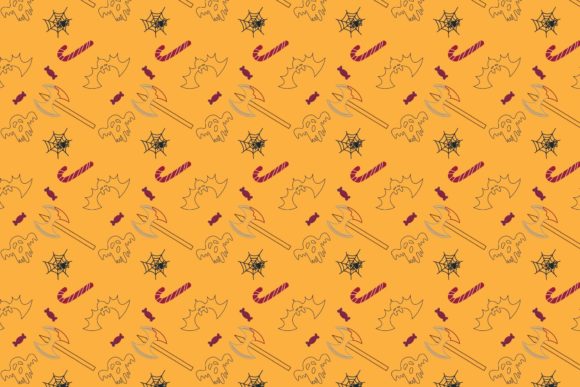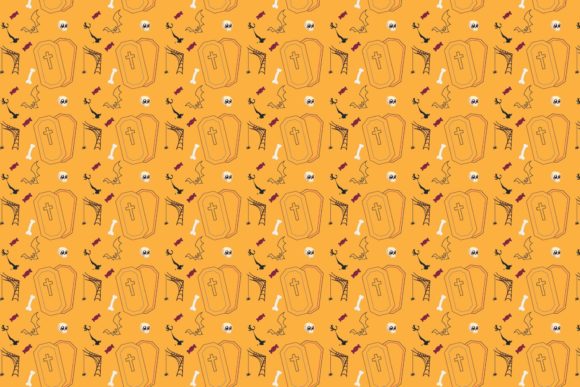
Mastering Vector Design with Halloween Patterns Icon-115: A Complete Guide to Scalable Spooky Graphics
Understanding the Technical Foundation of Halloween Patterns Icon-115
When approaching any pattern-based design project, the quality and flexibility of your source assets determine the entire creative workflow. Halloween Patterns Icon-115 represents a carefully constructed set of vector graphics that addresses a recurring challenge faced by designers, educators, and hobbyists alike: the need for scalable, editable, and reusable seasonal artwork. Unlike static raster images that degrade when resized or modified, this collection is built around vector technology, which means every curve, contour, and color boundary exists as a mathematical instruction rather than a fixed grid of pixels.
The immediate implication is that whether you are preparing a billboard-sized backdrop for a haunted house event or embedding a tiny icon into a mobile app interface, the graphic retains its crispness and precision. For professionals who have experienced the frustration of pixelated enlargements or the time-consuming process of redrawing artwork for different resolutions, this technical characteristic alone transforms the way Halloween-themed projects are approached. The vector format also allows for deep customization: elements can be ungrouped, recolored, reshaped, or combined with other graphics without any loss of original quality.
Beyond mere scalability, the vector nature of Halloween Patterns Icon-115 enables users to extract individual motifs, rearrange composition layers, and adapt the artwork to entirely new contexts. A pattern intended for a flyer background can be deconstructed into separate icons for use in a web navigation bar, or inverted for a dark-mode application. This flexibility is especially valuable in collaborative environments where multiple team members may need to repurpose the same asset across different media and formats.
The Complete File Ecosystem Inside the Package
A notable strength of the Halloween Patterns Icon-115 collection lies in the diversity of file formats included in the ZIP archive. Rather than forcing users into a single proprietary format, the package delivers six distinct file types, each serving a specific purpose within the design and production pipeline. Understanding what each format offers and when to use it can significantly streamline your workflow.
Native AI and EPS Files for Professional Workflows
The inclusion of both AI (Adobe Illustrator) and EPS (Encapsulated PostScript) files ensures compatibility with the most widely used vector editing applications. AI files are native to Adobe Illustrator, preserving layers, symbols, gradients, and other advanced attributes exactly as the designer intended. This is particularly important when working with complex patterns that include multiple overlapping elements, transparencies, or custom brushes. Designers can open the AI file, inspect the layer structure, modify individual components, and save back without any flattening or data loss.
EPS files, on the other hand, serve as a universal bridge between different vector software. Corel Draw, Affinity Designer, Inkscape, and even older versions of graphics programs can read EPS files with reliable accuracy. This cross-compatibility is crucial in studio environments where team members use varied tools, or when delivering assets to clients who may not have the latest Adobe subscriptions. Both file types are fully resizable and editable, meaning that scaling a pattern from 1 inch to 10 feet requires nothing more than dragging a corner handle.
PNG and JPEG for Raster-Based Projects
While vector formats offer superior flexibility, raster formats like PNG and JPEG remain essential for certain workflows. The PNG files in the Halloween Patterns Icon-115 package provide lossless compression with support for transparent backgrounds, making them ideal for web graphics, social media content, and presentation slides where a clean edge around the pattern is needed. Designers can drop these PNGs directly into layout software or website builders without needing to worry about background mismatches.
JPEG files, though lacking transparency, offer broad compatibility and smaller file sizes for use in email newsletters, online galleries, or quick mockups. Having both options means that whether you are uploading to a platform that requires JPEG or building a layered composition that demands transparency, the appropriate file is readily available. This eliminates the need for conversion steps that often degrade quality or introduce artifacts.
DXF for CAD and CNC Applications
One of the more unexpected yet powerful inclusions is the DXF (Drawing Exchange Format) file. DXF is a CAD-oriented format used by engineering, architecture, and fabrication software. For creators working with laser cutters, vinyl plotters, embroidery machines, or CNC routers, the DXF format opens up possibilities far beyond screen-based design. A Halloween pattern intended for a digital illustration can be laser-cut into plywood signage, etched into acrylic decorations, or stitched onto fabric costumes.
The presence of DXF in the Halloween Patterns Icon-115 suite means that educators teaching digital fabrication can use the same files for both graphic design lessons and hands-on making sessions. Hobbyists with access to a home cutter can turn patterns into stencils for pumpkin carving, window decals, or custom T-shirt designs. This file type effectively bridges the gap between pixel-based creativity and physical production.
SVG for Web and Digital Interfaces
SVG (Scalable Vector Graphics) has become the standard for web-based vector imagery, supported natively by all modern browsers. The inclusion of SVG files in the package allows web developers and UI/UX designers to embed Halloween Patterns Icon-115 directly into HTML and CSS without relying on external image assets. SVGs can be styled, animated, and scaled responsively, making them perfect for interactive Halloween-themed websites, landing pages, or seasonal app interfaces.
Because SVGs are text-based XML files, they can be minified, cached, and manipulated via JavaScript. For a developer building a spooky e-commerce theme or a holiday microsite, having ready-to-use SVG patterns reduces development time and ensures consistent rendering across devices. The semantic structure of SVG also improves accessibility when appropriate labels are added, aligning with modern web standards.
Practical Applications Across Different Creative Fields
The versatility of the Halloween Patterns Icon-115 collection becomes most apparent when examining how different professionals and enthusiasts integrate these files into their specific workflows. Rather than being limited to a single use case, the asset set adapts to a wide spectrum of creative demands.
Print Design and Merchandise Production
For graphic designers producing flyers, posters, banners, or packaging for Halloween events, the vector files eliminate the common pain point of resolution constraints. A pattern that looks sharp on screen will reproduce with the same clarity on a 24 x 36 inch poster when printed at 300 DPI. Furthermore, the editable nature of the AI and EPS files allows designers to adjust colors to match brand guidelines or to create seasonal variations—perhaps a purple-and-green variant for one client and an orange-and-black version for another—all from the same base file.
Merchandise creators producing T-shirts, mugs, tote bags, or phone cases benefit from the DXF and SVG formats for direct transfer to production machinery. The ability to isolate individual icons from the pattern and resize them without quality loss means that a single purchase of Halloween Patterns Icon-115 can supply artwork for an entire product line, from small decals to large prints. Business owners launching limited-edition Halloween merchandise can expedite their workflow without sacrificing professional output.
Web and Digital Media Integration
Web developers and digital marketers often work under tight deadlines during the holiday season. Having a ready-to-use set of SVG and PNG files means that promotional banners, email headers, social media graphics, and blog post illustrations can be assembled rapidly. The SVG files, in particular, allow for responsive design: a pattern that serves as a background on a desktop site can shrink proportionally for mobile screens without becoming blurry or losing detail.
Content creators running Halloween-themed channels or online stores can use the JPEG files for thumbnail designs and the PNG files for overlay elements in video editing software. The consistency of the pattern style across all files ensures a cohesive visual identity, which is key to building audience recognition during seasonal campaigns. Because the patterns are icon-based, they can also serve as bullet points, dividers, or decorative accents within long-form articles and newsletters.
Educational and Research Materials
Educators teaching graphic design, digital arts, or computer-aided design can use Halloween Patterns Icon-115 as a hands-on learning tool. Students can open the AI files to study layer organization, practice recoloring, and experiment with pattern scaling. The DXF files are particularly valuable in STEM and fabrication classrooms where students learn to prepare files for laser cutters or 3D printers. Instead of spending time creating basic shapes from scratch, instructors can focus on teaching transformation, repetition, and material constraints using professional-grade assets.
Researchers studying visual communication or cultural iconography can analyze the pattern motifs across different file formats to understand how vector representation preserves symbolic details. The availability of multiple format types also serves as a case study in file interoperability, a topic relevant to information science and digital preservation. Having a single set of icons that functions across design, fabrication, and analytical contexts demonstrates the concept of format-agnostic asset management.
DIY and Hobbyist Projects
For hobbyists and home crafters, the barrier to professional-looking results often lies in accessing high-quality source files. Halloween Patterns Icon-115 removes that barrier by providing files that work with both expensive commercial software and free alternatives like Inkscape or GIMP (with appropriate plugins). A hobbyist can use the SVG files in a browser-based design tool to create custom party invitations, or open the DXF in a free CAD viewer to generate templates for paper cutting and card making.
Scrapbooking, digital planner stickers, vinyl decals for laptops and water bottles, even homemade wrapping paper—all become feasible projects with minimal technical expertise. The clarity of the vector data ensures that even when printed on home inkjet printers or cut with entry-level vinyl machines, the results look polished. This democratization of design assets empowers non-professionals to achieve outcomes that previously required high-end software or expensive stock imagery.
Workflow Integration and Best Practices
To extract the maximum value from the Halloween Patterns Icon-115 files, it helps to adopt a few workflow strategies that leverage the strengths of each format. When starting a new project, consider opening the AI or EPS file first to inspect the full pattern and its components. Use the layer panel to hide, isolate, or duplicate elements that suit your specific composition. Because the vector data is resolution-independent, you can scale individual motifs up for hero images or scale them down for subtle background textures without ever needing to regenerate assets.
If your project involves both digital and physical outputs, begin by editing the master vector file and then export derivative raster versions only when necessary. This keeps the original intact and ensures that any changes—such as color corrections or layout adjustments—propagate consistently across all uses. For team collaborations, storing the AI/EPS master file in a shared drive and generating PNG/JPEG copies for quick previews keeps the workflow efficient without duplicating effort.
Web developers should prioritize SVG files for any interface element because they load quickly, scale seamlessly, and can be styled with CSS. Use PNG only where transparency is needed in environments that do not support SVG, such as older email clients. For fabrication, always use the DXF file and confirm the scale settings in your CAD software before sending to the cutter or printer, as vector scaling can behave differently in manufacturing contexts compared to screen display.
Why File Compatibility Matters for Long-Term Projects
One often overlooked aspect of digital assets is their longevity. Software updates, platform migrations, and team changes can render proprietary file formats inaccessible over time. The Halloween Patterns Icon-115 collection addresses this by including multiple open and widely supported formats. EPS and SVG are non-proprietary standards that are likely to be readable for decades, while AI files ensure immediate compatibility with current industry tools. DXF, originally developed in the 1980s, remains a staple in the CAD world, underscoring the value of choosing formats with strong backward compatibility.
For educators building curriculum resources or businesses establishing a reusable asset library, this forward-thinking approach reduces the risk of vendor lock-in and obsolescence. A pattern purchased today can still be edited and output five years from now, even if the original software has changed. This stability is particularly important for seasonal assets that may be reused year after year, as the initial investment in quality files pays dividends across multiple design cycles. The combination of editable vectors, multiple raster exports, and a fabrication-ready format ensures that Halloween Patterns Icon-115 not only meets immediate project needs but also serves as a durable component of a long-term creative toolkit.