Mandala Geometrical Patterns
Mandala geometrical patterns represent a unique intersection of art, mathematics, and practical utility. For creators, publishers, and entrepreneurs, these structured designs are more than just visually appealing—they are versatile assets that can be integrated into multiple workflows, from content creation to product development. Understanding how to work with these patterns effectively can streamline your process, improve output quality, and open up new opportunities for monetization and creative expression.
Whether you are preparing interior pages for a KDP publication, designing surface patterns for textiles, or assembling a coloring book for a niche audience, mandala geometrical patterns offer a foundation that is both repeatable and adaptable. The key lies not just in having the patterns, but in knowing how to use them before, during, and after your project work.
What Makes Mandala Geometrical Patterns a Practical Asset
At its core, a mandala geometrical pattern is a symmetrical, often circular design composed of repeating geometric shapes. These patterns are rooted in centuries of artistic tradition, but their modern utility extends far beyond decoration. For professionals working in self-publishing, graphic design, or content creation, these patterns serve as ready-to-use building blocks that save time without sacrificing quality.
Unlike freehand illustrations that require significant revision, geometrical mandalas are predictable. Their symmetry means they scale well, align easily, and work consistently across different layouts. This predictability is valuable when you are working under tight deadlines or producing multiple products in a series. Instead of designing each element from scratch, you can rely on a set of mandala geometrical patterns to maintain visual coherence across a body of work.
For example, if you are creating a series of coloring books for adults, using the same geometric style across all volumes establishes a consistent brand identity. Readers who enjoy one book will recognize the aesthetic in the next, increasing the likelihood of repeat purchases. This approach also streamlines your production pipeline because you are not reinventing the visual language for every new title.
Positioning Mandala Geometrical Patterns in Your Workflow
Integrating mandala geometrical patterns into your process can happen at multiple stages, depending on your goals. Some creators use these patterns during the planning phase to establish a mood board or visual direction. Others bring them in during production as filler elements, backgrounds, or feature pages. Still others use them after a project is complete as supplementary content, such as bonus pages in a digital download.
Consider a typical self-publishing workflow. Before you start formatting a book, you decide on the interior style. If you are producing a mindfulness journal, mandala geometrical patterns can serve as decorative page borders, section dividers, or full-page art. By selecting your patterns early, you can plan the layout around them rather than forcing them into a design later. This upfront integration reduces rework and ensures that the final product feels intentional rather than patched together.
For surface pattern designers, the workflow often begins with a motif. A mandala geometrical pattern can be the starting point for a repeat pattern that you then color, scale, and adapt for fabric, wallpaper, or digital surfaces. In this context, the pattern is not the end product but the foundation upon which you build. You might take a single mandala design, extract its core geometry, and create multiple variations by changing the color palette, rotation, or background treatment.
Educators and workshop facilitators can also benefit from these patterns. If you teach geometry, art, or mindfulness, having a set of mandala geometrical patterns allows you to demonstrate principles of symmetry, radial balance, and repetition without needing to draw complex diagrams from scratch. You can focus on the teaching rather than the production of visual aids.
KDP Interiors and Self-Publishing
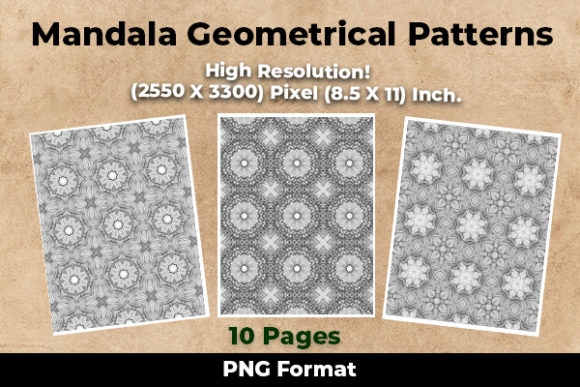
For KDP publishers, interior pages must meet specific technical requirements while also appealing to the target audience. Mandala geometrical patterns fit this need well because they are high-resolution, scalable, and visually engaging. A package that includes 10 pages of PNG files at 2550 x 3300 pixels (8.5 x 11 inches) gives you exactly the right dimensions for standard book interiors. You can use these files directly as coloring pages, or you can incorporate them into journals, planners, and activity books.
One practical tip is to organize your pattern files by complexity level. Some readers want simple, meditative designs, while others prefer intricate, detailed patterns. By having a range available, you can match the content to your audience. For a beginner coloring book, select patterns with larger, more open areas. For an advanced book, choose denser, more detailed geometrical arrangements.
Another consideration is file management. Since you are working with PNG files that have transparent backgrounds, you can layer them easily with other design elements. This allows you to create composite pages where a mandala pattern sits behind text or interacts with other graphics. Keep your source files organized in folders labeled by theme, complexity, or intended use so you can locate them quickly during production.
Pattern Design and Surface Applications
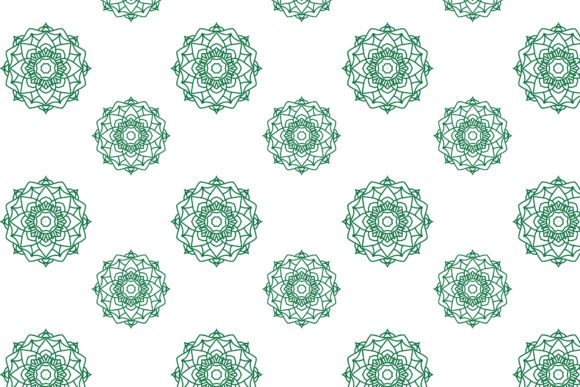
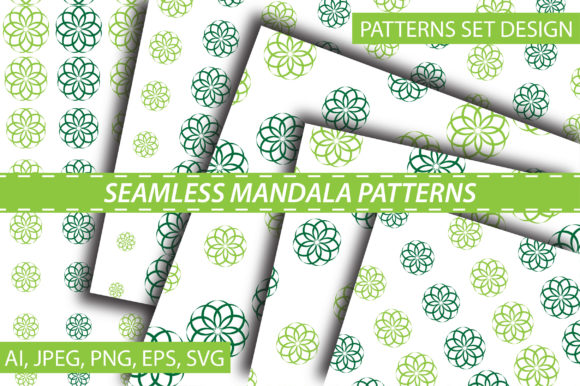
Surface designers often work with repeats, and mandala geometrical patterns are naturally suited for this. The symmetry of a mandala means that it can be tiled seamlessly with proper alignment. If you are designing for fabric, gift wrap, or digital backgrounds, these patterns reduce the time you spend on repeat construction.
When adapting a mandala pattern for surface use, consider the scale. A pattern that looks balanced at 8.5 x 11 inches may feel overwhelming on a small notebook or too sparse on a large duvet cover. Use your design software to preview the pattern at different sizes before committing to a final layout. The high resolution of the source files—2550 x 3300 pixels—gives you flexibility to scale down without losing detail, but scaling up requires careful checking to avoid pixelation.
Also think about color. Many geometrical mandala patterns are provided in black and white, which is ideal for coloring books and line art. If you need colored versions, you can add fills, gradients, or overlays in your editing software. This gives you control over the final look while keeping the underlying geometry consistent.
Coloring Pages and Therapeutic Content
The adult coloring market continues to be strong, and mandala geometrical patterns are a staple in this category. Readers seek these designs for relaxation, focus, and creative satisfaction. If you are producing coloring pages, the quality of the line art is critical. Lines should be crisp, closed, and evenly weighted so that coloring tools—whether markers, colored pencils, or digital brushes—work cleanly.
With a 10-page package of high-resolution PNGs, you have enough content for a small booklet, a digital download, or a series of single-page products. You can also use the patterns as bonus content for a larger book, giving buyers extra value without additional production cost.
When preparing coloring pages, pay attention to margins. A standard 8.5 x 11 inch page should have adequate white space around the pattern so that it prints fully without being cut off by the printer. Test your files by printing a sample page before publishing. This simple quality control step prevents returns and negative reviews.
Technical Considerations for Smooth Integration
Working with mandala geometrical patterns involves more than just artistic appreciation. You need to consider file format, resolution, and compatibility with your tools. PNG files are widely supported, but they are raster images. If you need to edit the geometry itself—reducing the number of petals, changing the symmetry, or isolating specific elements—you may need to convert the pattern to a vector format or work with a layered source file.
For most publishing and design workflows, the provided resolution of 2550 x 3300 pixels is sufficient. This gives you 300 DPI at the target size, which is the standard for print. Always verify that your software respects the DPI metadata. Some programs treat images purely in pixel dimensions, so you may need to set the print size manually.
Storage and organization matter more than most people realize. If you accumulate many pattern files over time, a consistent naming convention will save you hours of searching. Use names that describe the pattern type, complexity, and intended use. For example, a file might be named "mandala_geometric_complex_12petal.png" rather than "pattern3.png." This small habit pays off during busy production cycles.
Backup your files in at least two locations. Losing a set of original patterns means losing time and potentially missing a deadline. Cloud storage, external drives, or version-controlled repositories all work, as long as you have a recovery path.
Quality Control and Long-Term Use
Before you use any mandala geometrical pattern in a final product, inspect it at full resolution. Look for open shapes, uneven lines, or areas where the geometry breaks down. Even well-made patterns can have minor artifacts that become noticeable when printed or viewed on a large screen. Catching these issues early prevents customer complaints and preserves your reputation.
If you are producing multiple products over time, consider building a pattern library. A library is a curated collection of patterns that you have tested, categorized, and approved for use. When you start a new project, you pull from the library rather than starting from scratch. This accelerates your workflow and ensures consistency across your catalog.
Long-term use also involves keeping your patterns relevant. Trends in design change, but geometrical mandalas have a timeless quality that adapts well to different aesthetics. You can update the coloring, context, or application without changing the core geometry. This means a single set of patterns can serve you for years if you maintain them properly.
Practical Observations for Getting Started
If you are new to working with mandala geometrical patterns, begin with a small project. Use one or two patterns to create a simple coloring page or a journal page. This allows you to test your workflow, understand the file handling, and see how the patterns behave in your tools. Once you are comfortable, scale up to larger projects like a full book or a pattern collection.
Pay attention to your audience. Adult coloring enthusiasts often look for designs that are challenging but not frustrating. Geometrical patterns with clear symmetry and distinct sections tend to work well because they offer natural boundaries for color placement. If your audience includes beginners, choose patterns with larger spaces. If you are targeting experienced colorists, offer more intricate designs.
Finally, consider the broader context of your work. Mandala geometrical patterns are not isolated products; they are part of a larger creative and commercial system. When you integrate them thoughtfully—matching resolution to print requirements, organizing files for easy access, and testing before publication—you turn a simple asset into a reliable tool for ongoing production.
Whether you are publishing on KDP, designing for surface applications, or creating therapeutic coloring content, these patterns give you a structured foundation that supports both creativity and efficiency. The best approach is to treat them not as finished products, but as versatile components that fit into your process at the right time and in the right way.